 Muttmates
Free camps and rest areas with a dog: what works and what doesn't
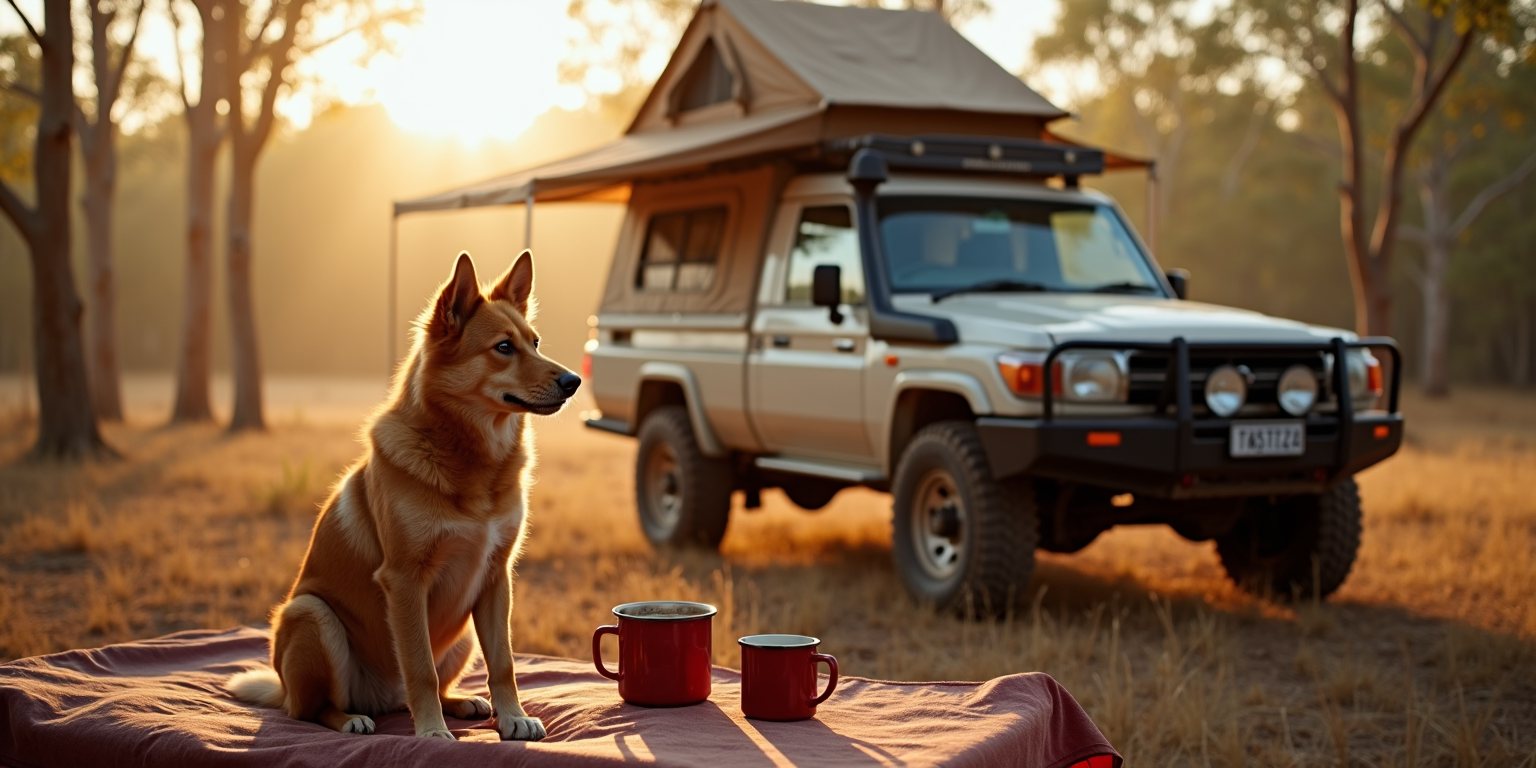
Free camps and highway rest areas are where a lot of Australian dog travel actually happens. No booking, no boom gate, and usually no neighbour close enough to mind a bit of barking at a possum. We list dog-friendly free camps and rest areas alongside the caravan parks in our directory, and they are a different kind of stay with their own rules, most of them unwritten. Here is what works.
First, the one hard rule: know whose land you are on
The make-or-break question at a free camp is not facilities, it is tenure. A council rest area, a showground or a state forest camp will usually take a dog on a lead. A national park will not: dogs are banned in national parks, and the ban covers the camp ground, the walking tracks and the car park. The boundaries are not always obvious from the road, and a beautiful free camp just inside a national park gate is a fine waiting to happen. When our road trip planner builds a route, it warns when a stop lands inside a national park for exactly this reason.
What "no facilities" really means with a dog
- No water. Carry more than you think you need. A dog in a hot climate drinks litres, and the next tap might be tomorrow. Ten litres for the dog alone is not excessive on a summer leg.
- No fences. A free camp is open bush. Whatever your dog's recall is like at the park, a roo at dusk will test it. A long line or a tether point at camp is not overkill, it is how the dog is still there in the morning.
- No bins. Everything you pick up travels with you. Bag it, seal it in a container with a lid, and carry it to the next town bin. Leaving it, bagged or not, is how free camps get closed.
- Nobody mowing. Long grass in warm weather means ticks and snakes. Walk the dog on the tracks and the gravel, check it over at camp, and know where the nearest vet is before you need one.
Baits are the danger nobody tells you about
Fox and wild dog baiting happens on and around public land across rural Australia, and the baits are lethal to pet dogs. Baited areas are signposted at entry points, which is one more reason to read every sign at a camp, not just the ones about camping. In baited country the dog stays on the lead full stop, and anything found dead stays uninvestigated. If you suspect a bait, it is an emergency drive to the nearest vet, not a wait-and-see.
Rest area etiquette on the long hauls
Highway rest areas are shared with truck drivers on mandated breaks, grey nomads and tired families. A dog makes you more visible, so be the easy kind of visible: lead on from the moment the door opens, toilet the dog on the verge away from the picnic tables, pick up in daylight and in the dark, and keep the dog clear of trucks, whose drivers are sleeping to a legal clock and do not need a terrier opinion at 2am.
The overnight checklist
- Tenure checked: not a national park, no "no camping" or baiting signs.
- Water for the dog, separate from yours, plus a bowl that lives by the door.
- Tether point or long line sorted before dark.
- Dog sleeps inside the van, the tent or the car. Dingoes and foxes exist, and so do storms.
- Morning sweep: nothing left behind, nothing new in the dog's coat.
Find dog-friendly camps and stays
Free camps open, close and change tenure without much notice. Signs at the camp are the current truth; treat any listing as the starting point.
Common questions
Are dogs allowed at free camps?
It depends whose land the camp is on. Council rest areas, showgrounds and many state forest camps take dogs on a lead; national parks ban dogs entirely, including the camp grounds and car parks. Check the signs at the entry every time.
What should I know about baiting near free camps?
Fox and wild dog baits are laid on and around public land in rural Australia and are lethal to pet dogs. Baited areas are signposted at entry points. In baited country keep the dog on the lead, and treat any suspected bait as an emergency drive to the nearest vet.
How do I find dog-friendly free camps along my route?
Muttmates lists free camps and rest areas alongside caravan parks in the stays directory, and the road trip planner strings them along your actual driving route with a warning when a stop lands inside a national park.